Introduction
Let's be direct: if your business website was built without thinking about artificial intelligence, it may already be showing signs of age — even if it was launched just a year ago.
In 2026, the web isn't just a place to put information. It's a dynamic, intelligent system that adapts to users, predicts behavior, personalizes experiences, and drives decisions — all in real time. Businesses that understand this are winning online. Those that don't are quietly losing ground.
This guide breaks down exactly what "AI-ready" means for your business website, which features matter most, how to implement them without rebuilding from scratch, and why working with the right web developer makes all the difference.
What Does "AI-Ready" Actually Mean?
An AI-ready website isn't one that just has a chatbot slapped onto its homepage. It's a website designed, built, and optimized in a way that allows artificial intelligence — whether through integrated tools, APIs, or embedded intelligence — to function effectively across every layer of the user experience.
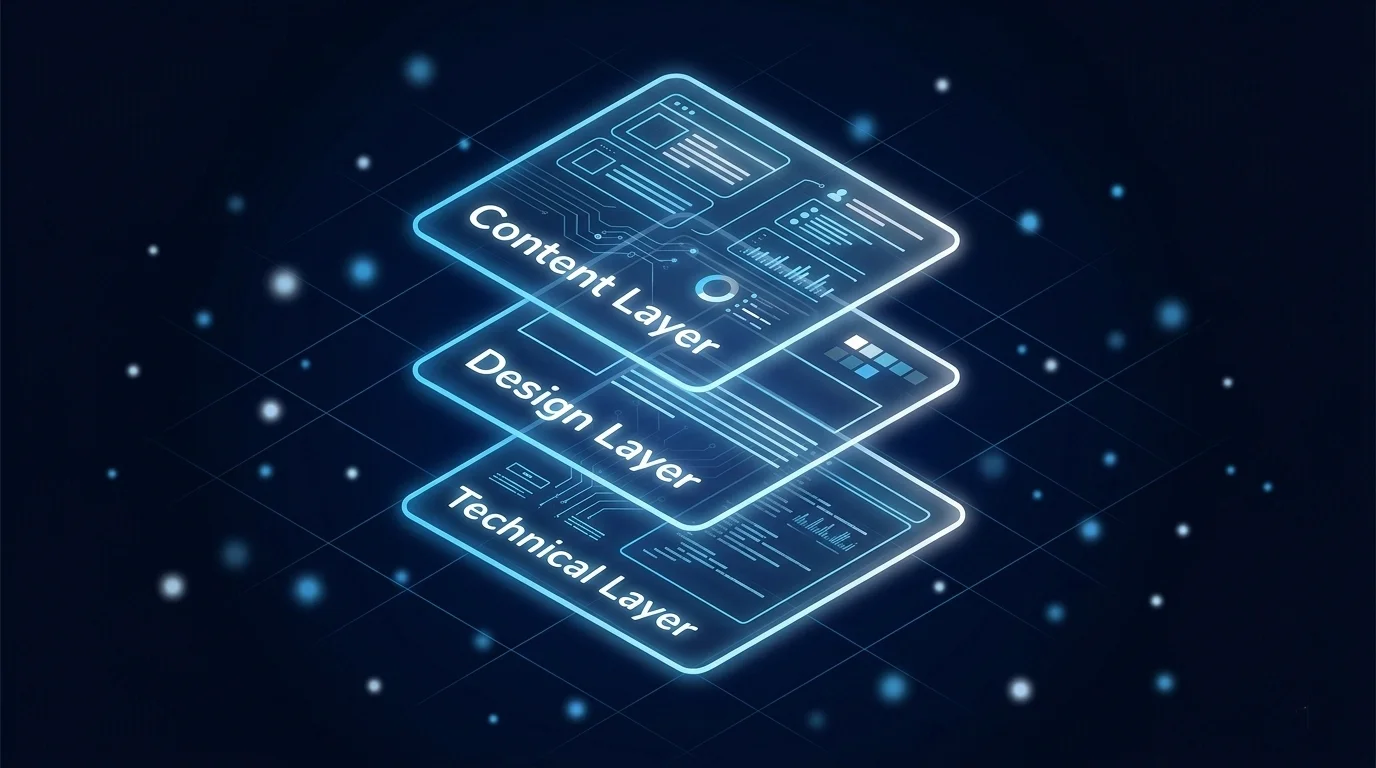
Think of it in three layers:
Technical Layer
Clean code, fast load times, structured data & API-friendly infrastructure.
Design Layer
Layouts supporting dynamic content, personalization & AI-optimized interface patterns.
Content Layer
Semantic HTML, schema markup & natural language patterns AI can read and rank.
When all three layers are aligned, your website becomes a living platform — not just a static brochure.
Why 2026 Is the Tipping Point
AI adoption in web development didn't happen overnight. From 2015 to 2021, AI tools mainly handled repetitive tasks like auto-formatting and basic testing. Between 2022 and 2024, tools like GitHub Copilot began generating substantial code blocks in real time.
But 2026 is different. AI is now embedded across the entire web lifecycle: planning, design, development, testing, deployment, personalization, and optimization.
84%
of developers are now using or planning to use AI tools in their workflows
40%
of web designers use AI tools daily in their design process
For businesses, this shift has a direct impact. Your competitors are already using AI to:
- Build websites faster and at lower cost
- Personalize content for each visitor in real time
- Predict user intent and adapt page layouts dynamically
- Automate customer support through intelligent chatbots
- Detect performance issues and fix them automatically
If your website isn't equipped to participate in this ecosystem, you're not just missing features — you're ceding competitive advantage.
7 Core Features of an AI-Ready Business Website
Intelligent Personalization Engine
Static homepages are a relic of the past. In 2026, the best-performing business websites show different content to different visitors based on their location, browsing behavior, device type, referral source, and past interactions.
Tools like Dynamic Yield and Insider allow websites to create real-time personalized experiences — the right offer, the right headline, the right layout — served to the right person at the right moment. Even smaller businesses can implement lightweight personalization using platforms like HubSpot or Webflow's CMS conditionals.
The impact is measurable: personalized websites consistently see higher engagement, lower bounce rates, and stronger conversion rates compared to their static counterparts.
Conversational AI & Smart Chat
A well-configured AI chatbot does far more than answer FAQs. Modern conversational AI — powered by models like GPT-4 and purpose-built platforms like Drift, Intercom, or Tidio — can qualify leads, book appointments, recommend services, and escalate conversations to human agents when needed.
The key is integration. Your chatbot should connect to your CRM, your calendar, and your service catalog. An isolated chatbot is a novelty. A connected chatbot is a 24/7 sales assistant.
Structured Data & Schema Markup
AI systems — including Google's search algorithm and AI answer engines like Perplexity and SearchGPT — read your website's structured data to understand what your business does, where you're located, what services you offer, and how trustworthy you are.
Without schema markup (LocalBusiness, Service, FAQ, Review schemas), your website is essentially invisible to the AI layer of the modern web. With it, you're eligible for rich snippets, featured answers, and AI-generated recommendations — all of which drive organic traffic without additional ad spend.
Core Web Vitals & Performance Optimization
AI-powered search ranking systems place enormous weight on user experience signals. Google's algorithm evaluates your website's Largest Contentful Paint (LCP), Interaction to Next Paint (INP), and Cumulative Layout Shift (CLS) — the three Core Web Vitals that measure how fast, responsive, and stable your site feels to real users.
An AI-ready website is built for speed from the ground up: optimized images in next-gen formats (WebP, AVIF), server-side rendering where appropriate, lazy loading, minimal unused JavaScript, and CDN delivery. These aren't optional extras — they are the baseline standard in 2026.
AI-Friendly Content Architecture
The way you structure your website's content determines how well AI systems can understand and promote it. This means using semantic HTML5 elements correctly (article, section, nav, main), writing in clear natural language that matches how people actually search, and organizing content in a logical hierarchy.
It also means thinking about voice search and AI answer engines. As more users interact with the web through voice queries and AI assistants, your content needs to answer questions directly, concisely, and authoritatively.
API-First & Headless Architecture
If your business is scaling, an API-first or headless CMS architecture positions your website to connect with virtually any AI tool, third-party platform, or future technology without requiring a complete rebuild.
Platforms like Contentful, Sanity, or even WordPress with a headless setup allow your content to flow into websites, apps, chatbots, and AI tools through a single source of truth — eliminating data silos and letting your digital ecosystem grow organically.
AI-Assisted Analytics & Behavioral Heatmaps
Knowing what users do on your website is one thing. Understanding why — and what to do about it — is another. AI-powered analytics tools like Microsoft Clarity, Hotjar, and Google's built-in AI insights surface actionable patterns from complex user data automatically.
Where are users dropping off? Which CTAs are being ignored? Which pages drive the most qualified leads? AI analytics tools answer these questions continuously — allowing you to make smarter design and content decisions without hours of manual analysis.
Real-World Example: The Difference AI-Readiness Makes
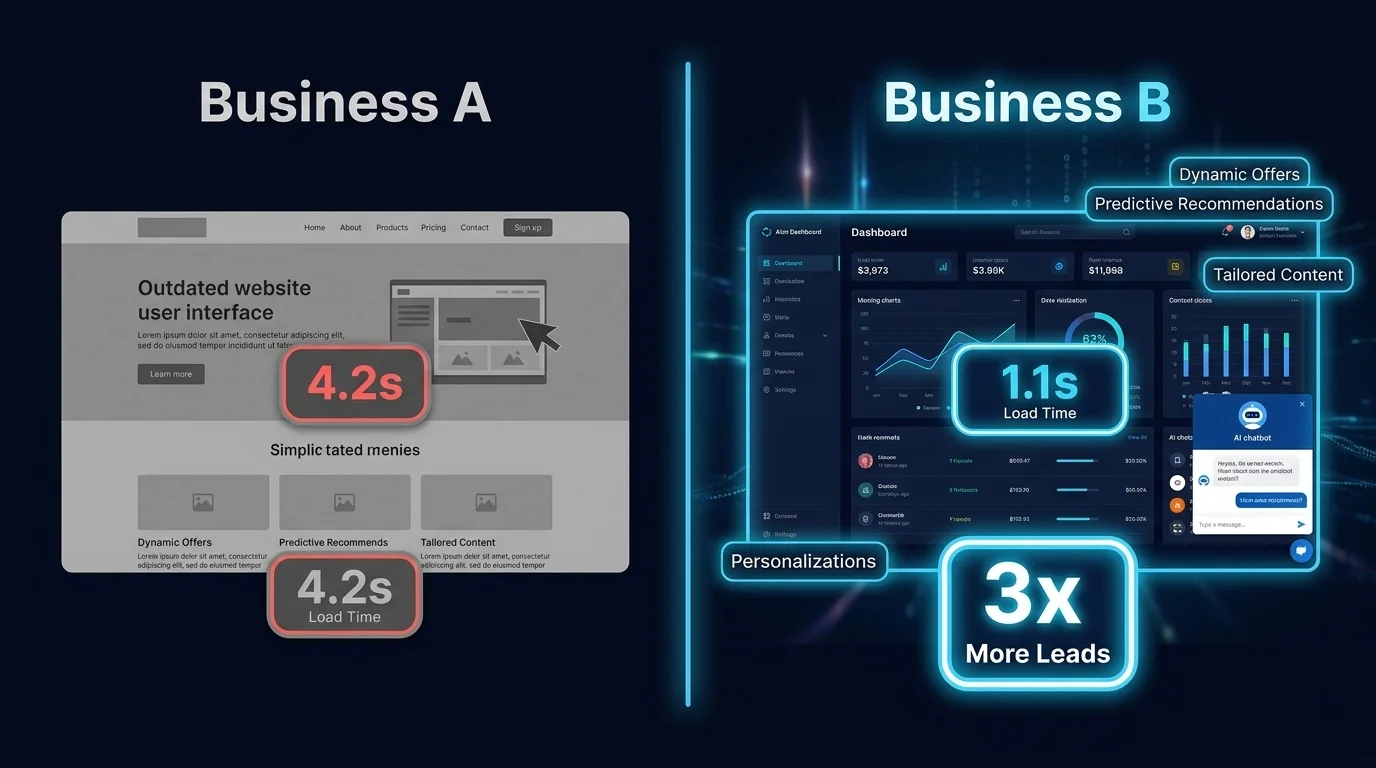
Consider two similar small businesses — both selling professional services in a competitive market.
Business A
A standard five-page website: homepage, about, services, blog, contact. It loads in 4.2 seconds, has no structured data, and relies on a generic contact form.
Business B ✦
Invested in an AI-ready website. Loads in 1.1 seconds, uses structured schema markup, personalized hero section, trained AI chatbot, and full CRM integration.
Six Months Later — Business B Results:
3x
More qualified leads per month
40%
Less time on manual follow-up
Top
Ranking in Google's AI Overview
How to Make Your Existing Website AI-Ready Without Starting Over
You don't necessarily need to rebuild your entire website from scratch. In many cases, an experienced web developer can retrofit AI-readiness through targeted improvements:
Performance Audit & Optimization
Address Core Web Vitals, image optimization, caching, and hosting upgrades.
Schema Markup Implementation
Add structured data to your key pages — homepage, service pages, blog posts, and contact page.
AI Chatbot Integration
Connect a trained conversational AI tool to your website and link it to your CRM or booking system.
Analytics Upgrade
Replace basic analytics with AI-powered tools that surface actionable behavioral insights.
Content Restructuring
Reorganize existing content to align with semantic HTML standards and natural language search patterns.
Personalization Layer
Introduce conditional content blocks that adapt based on user source, location, or behavior.
A phased approach — prioritizing the highest-impact improvements first — allows you to modernize your web presence without the disruption and cost of a full rebuild.
Choosing the Right Web Developer for an AI-Ready Website
Building an AI-ready website requires a developer who understands both the technical foundations and the strategic goals behind them. You're not just looking for someone who can write clean code — you need a partner who thinks about your website as a business system.
When evaluating a web developer for an AI-ready project, look for:
- Proven experience with performance optimization and Core Web Vitals
- Understanding of structured data and schema markup implementation
- Familiarity with API integrations and third-party AI tool connections
- Experience with modern CMS platforms (WordPress, Webflow, headless setups)
- A portfolio that shows real-world results — not just visual design, but business outcomes
The right developer doesn't just build you a website. They build you a competitive advantage.
Conclusion
The shift toward AI-powered web experiences isn't coming — it's already here. In 2026, an AI-ready website isn't a premium upgrade. It's the new baseline for any business that wants to compete online, attract the right customers, and grow sustainably.
The good news? You don't have to figure it all out alone. Whether you're starting from scratch or upgrading an existing site, the right web development partner can make the entire process clear, strategic, and results-driven.
Your website is your most valuable digital asset. It's time to make it intelligent.
Ready to upgrade?
Let's build your AI-ready website
From performance optimization to chatbot integration — get a website that works as hard as you do, 24/7.
Start a Project →
Professional Web Designer and WordPress Developer from Gujarat, India. Helping brands grow online through clean, fast, and conversion-focused websites.
View Profile